Titan ceramic, PTFE non-stick, stainless steel or cast iron — which fry pan is actually right for your kitchen?
The fry pan is the most-used pan in most kitchens — it fries the eggs, sears the fish and reheats everything else. The material it is made from decides how it heats, how easy it is to clean, and how healthy it is over time. So before you buy, it pays to compare.
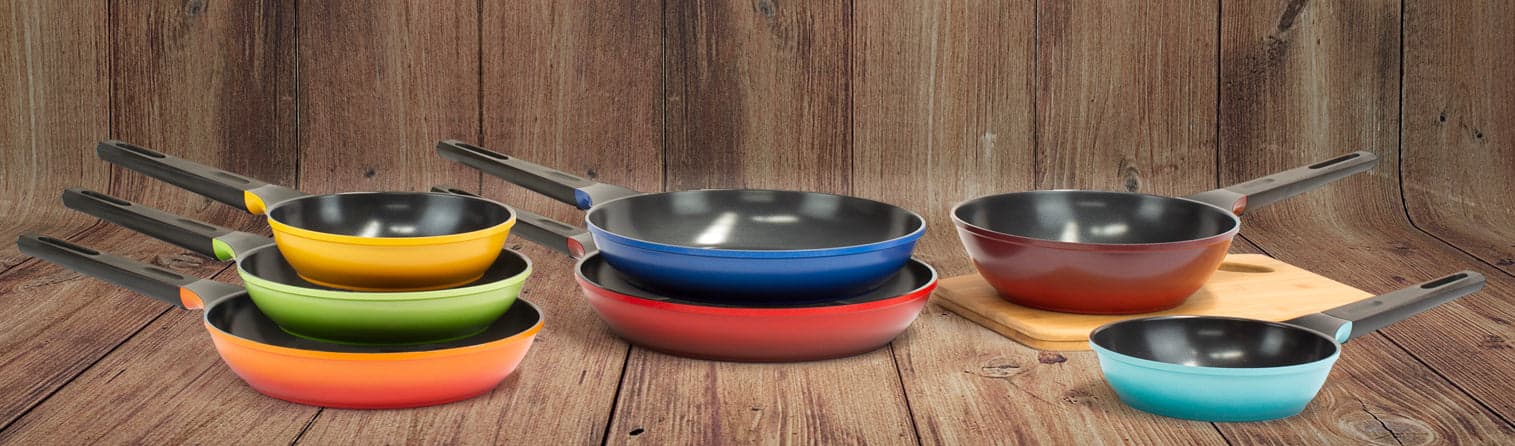
Titan ceramic pans, like the ones in the Neoflam range, are coated with a mineral-based finish fired from silica. They are naturally non-stick, PFAS-free, and work beautifully on everyday medium heat. Food slides off, clean-up takes seconds, and there is no coating chemistry to worry about — making ceramic the easiest daily all-rounder.
Traditional PTFE non-stick still rules in some kitchens because it is undeniably slick. But the same chemistry that makes it slippery relies on PFAS compounds, and above high temperatures the surface can begin to break down. Over time even the best PTFE pan degrades and needs replacing — which is why so many cooks are switching to ceramic.
Stainless steel sears harder and browns better than any coated pan, and it is built to last decades. The trade-off is technique: without a coating, food will stick unless you heat the pan properly and use enough fat. Owners love its durability, but stainless is a skill you learn, not a shortcut.
Cast iron offers unmatched heat retention and, once seasoned, a near-non-stick finish — but it is heavy, takes maintenance and needs regular seasoning. For most home cooks the answer is simple: a Titan ceramic pan for daily cooking, and a stainless skillet for the rare high-heat sear. One for the weeknights, one for the weekend.